
Lekan Yusuf, Ibadan
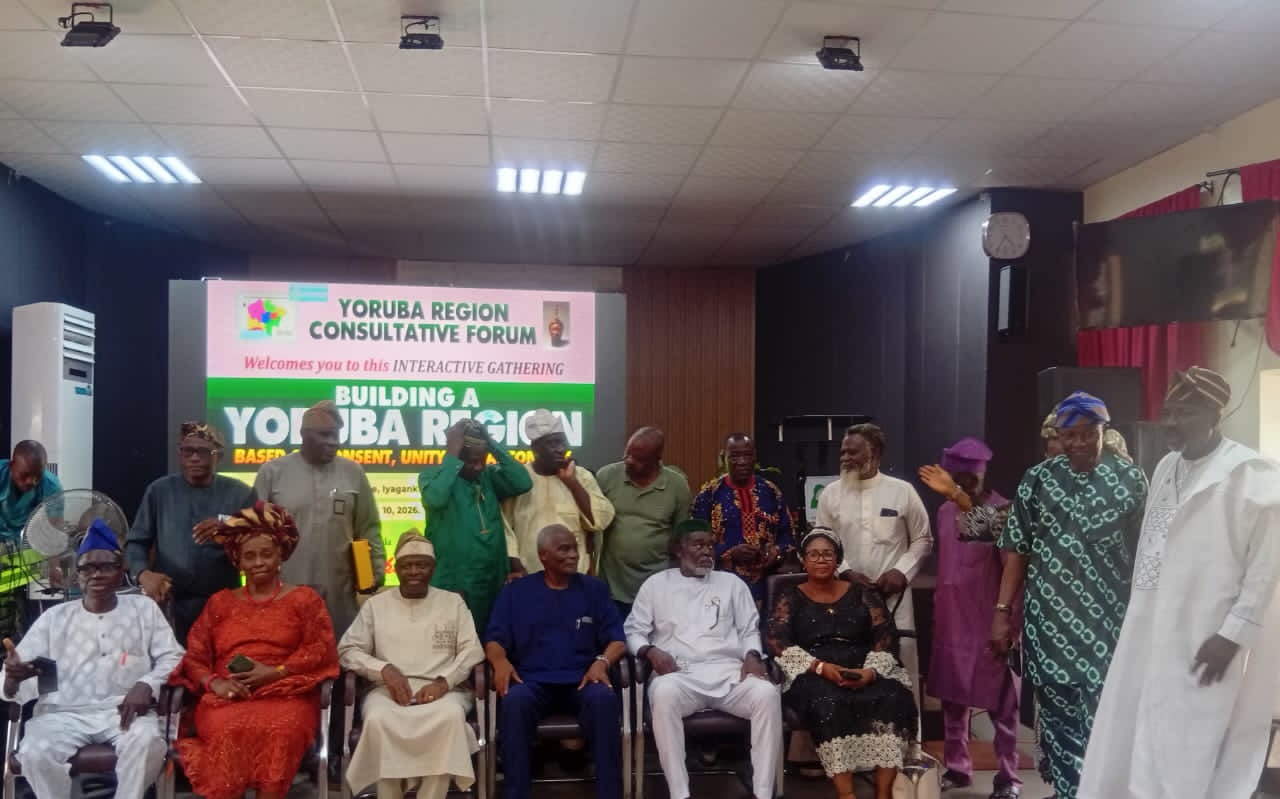
The Yoruba Region Consultative Forum has endorsed the call for the regionalisation of Nigeria, with stakeholders from across Yoruba land agreeing to pursue the creation of a Yoruba Region as part of broader efforts to restructure the country.

The resolution was reached on Thursday, September 10, 2026, at the Dapo Aderogba Hall of the Nigeria Union of Journalists (NUJ) Press Centre, Iyaganku GRA, Ibadan, during a consultative meeting convened to deliberate on the outcome of the Abuja Summit on regionalism and chart a roadmap for the proposed Yoruba Region.
The meeting brought together representatives from different parts of Yoruba land, including participants from Kwara and Kogi states, who deliberated on the proposed regional structure, governance, economic development, security, education and human capital development.
Speaking on the objective of the gathering, the Convener of Citizens’ Rebirth and Awareness Initiative, Owolabi Oladejo, said the initiative was a product of an August 17–19 Abuja meeting where Nigerians from different ethnic and regional backgrounds deliberated on the future of the country.
Oladejo said the consultations eventually produced 17 proposed regions, with representatives mandated to return to their respective regions and present the Abuja resolutions to their people.
According to him, the Yoruba delegation was the first among the 17 regions to successfully convene a consultative meeting and agree to pursue the regionalisation agenda.
He said, “We are expecting Yoruba people to come together and demand a region of their own. If we continue like this, we risk losing the nation.”
Oladejo explained that the Yoruba Region Consultative Forum would now work through various committees to develop proposals for a regional constitution and institutional framework capable of promoting good governance and development.
He added that the initiative was inspired by the achievements recorded in the former Western Region, particularly during the administration of the late Chief Obafemi Awolowo, stressing that the proponents believe the achievements of that era could be replicated and surpassed.
Also speaking, the Chairman of the occasion,a retired Brigadia General Ajibola Toogun, described the agitation for restructuring and regionalisation as long overdue, arguing that the Yoruba people had suffered setbacks since independence as a result of the country’s political and economic structure.
Toogun maintained that the proposed restructuring was aimed at returning political power to the people and creating a system where citizens would have greater influence over governance and development.
He also criticised what he described as privileges enjoyed by political office holders, particularly pensions and other benefits attached to political positions, arguing that greater attention should be given to ordinary workers who spend decades in public service.
According to him, the movement was not dependent on individual political candidates winning federal elections, but on mobilising citizens to demand a system that reflects their aspirations.
In his remarks, Comrade Jare Ajayi, one of the proponents of the regionalisation initiative, said the meeting was organised to present the outcome of the Abuja Summit to Yoruba stakeholders and obtain their collective position.
Ajayi said the initiative initially started with six proposed regions based on the country’s six geopolitical zones but later expanded to 17 regions following consultations across the country.
He explained that representatives of the various regions were expected to return home, consult their people and obtain their endorsement before signing a common Article of Federation.
Ajayi said the Yoruba Region had agreed in principle to the Article of Federation, which would subsequently be harmonised with the positions of the other proposed regions.
He added that the harmonised document would be presented to the Federal Government, the National Assembly, State Houses of Assembly and other relevant stakeholders.
“We are glad that after presenting the report of the outcome of the Abuja Summit, our people — representatives from various parts of Yoruba land — agreed today that yes, we should go for the Yoruba Region,” Ajayi said.
He stressed that the proposed regional arrangement was intended to ensure that citizens had a sense of belonging while promoting development, economic prosperity and improved governance.
The forum subsequently constituted committees to work on key areas critical to the proposed Yoruba Region.
The committees include:
Yoruba Region Constitution; Governance Structure and Institutions; Natural Resources and Regional Assets; Infrastructure and Economic Development; Regional Security and Public Safety; Education and Skills Development; and Social Welfare and Human Capital Development.
Ajayi noted that representatives from virtually all parts of Yoruba land were present at the meeting, including Kwara and Kogi, describing the participation as a demonstration of broad support for the regionalisation conversation.
The meeting ended with resolutions aimed at advancing the proposed Yoruba Region and further engaging stakeholders on the restructuring of Nigeria.