
Lekan Yusuf, Ibadan
Media practitioners have been urged to uphold the highest standards of professionalism, ethics, and accuracy in reporting as a way of combating fake news, misinformation and the growing security challenges facing the country.

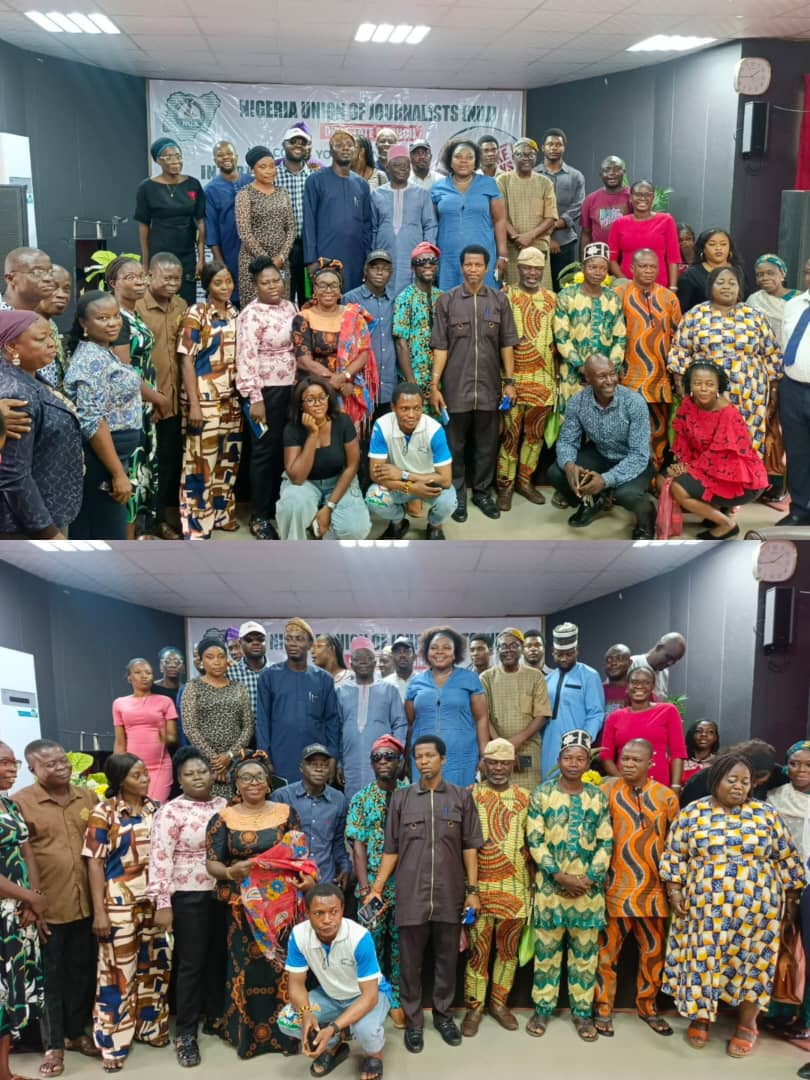
The call was made at an interventional seminar on “Reporting in the Era of Insecurity and Fake News and the Implications of the Cybercrime Act,” organized by the Nigeria Union of Journalists (NUJ), Oyo State Council, in Ibadan.
In his opening address, the Chairman of the NUJ Oyo State Council, Comrade Akeem Babatunde Abas, described the seminar as a critical intervention aimed at strengthening responsible journalism at a time when insecurity, fake news, cyber manipulation, and unethical media practices pose serious threats to national unity and public confidence.
According to him, journalism remains one of the most powerful professions in society, capable of promoting peace, exposing corruption, and strengthening democracy. He, however, lamented the increasing infiltration of the media space by purveyors of fake news, untrained bloggers, and social media propagandists who prioritize sensationalism and falsehood over truth and professionalism.
“Fake news is not journalism. Character assassination is not journalism. Blackmail is not journalism. Journalism demands discipline, verification, accuracy, fairness, and responsibility,” he declared.
The NUJ chairman warned journalists against sacrificing professional standards for traffic, popularity, or financial gain, stressing that careless reporting on insecurity, terrorism, kidnapping, and communal conflicts could worsen tensions and endanger lives.
He also urged media practitioners to familiarize themselves with the provisions of the Cybercrime Act while cautioning authorities against using cybercrime laws to suppress legitimate journalism and press freedom.
Abas reaffirmed the commitment of the NUJ Oyo State Council to defending journalists against harassment and intimidation while insisting that the union would not condone fake news, blackmail, or unethical conduct disguised as journalism.
Speaking during the seminar, former Chief Press Secretary to the Oyo State Governor, Taiwo Adisa, emphasized the need for media practitioners and regulatory agencies to work together in addressing the menace of fake news.
He noted that while freedom of expression remains a fundamental right, deliberate dissemination of false information capable of misleading the public or creating panic must be discouraged through appropriate legal and regulatory frameworks.
Adisa observed that a significant proportion of fake news originates from online platforms and social media channels, adding that individuals also have a responsibility to verify information before sharing it.
According to him, government institutions, regulatory bodies, and lawmakers must focus on developing measures that target misinformation without restricting legitimate public discourse.
He cited instances where false reports about security situations and kidnapping victims generated unnecessary panic and raised false hopes among members of the public.
“Everyone has a duty to promote truth and accuracy. By doing so, we contribute to a more informed and stable society,” he said.
Also speaking, the Deputy Director of Programmes, Radio Nigeria Ibadan Zonal Station, Rev. Niyi Idaunsi, described fake news as a major contributor to insecurity and social instability.
He argued that fake news undermines the core values of journalism and erodes public trust in the media.
“I dare say that fake news itself is a form of insecurity because it creates fear, confusion, and uncertainty among the public. In a nation already grappling with security challenges, the spread of fake news is like pouring fuel on a fire that is already causing significant damage,” he said.
Dahunsi urged professional journalists to take the lead in confronting fake news by verifying information and promptly publishing factual reports to counter false narratives.
According to him, the most effective response to misinformation is the consistent dissemination of accurate, balanced, and credible information.
The cleric and media professional further commended the NUJ Oyo State Council for organizing the seminar, describing it as a timely initiative that should be sustained through regular training and capacity-building programmes.
He recommended that such engagements be held periodically to help journalists keep pace with evolving trends in the media industry and strengthen ethical standards in the profession.
The seminar attracted journalists, media executives, legal practitioners, security experts, communication scholars, and other stakeholders who deliberated on the challenges posed by insecurity, fake news, digital misinformation, and the implications of the Cybercrime Act on journalism practice in Nigeria.
Participants stressed the need for continuous professional training, fact-checking, conflict-sensitive reporting, and adherence to ethical standards as essential tools for preserving public trust in the media and promoting national development.