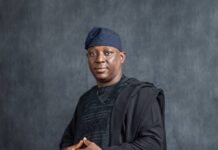


A former Attorney General and Justice Commissioner in Oyo state, Mutalib O. Adebayo, has clarified that the Supreme Court’s pronouncement on the emergency rule in Rivers State was a final judgement, and not a mere procedural ruling.
The Senior Advocate of Nigeria, made this known during an interview on Eagle 102.5FM, Ilese Ijebu, on the landmark Supreme Court decision affirming the President’s constitutional authority to declare a state of emergency.

President Bola Ahmed Tinubu had on Tuesday, 18 March, 2025 declared a state of emergency in Rivers State, suspending the governor, deputy governor, and the State House of Assembly for six months while appointing an administrator, Vice Admiral Ibok Ibadan (Rtd). The President cited section 305 of the 1999 Constitution as justification. The Supreme Court has declared on Monday that the president did have the authority to declare the state of emergency.
Reacting to whether the President has the authority to declare the state of emergency and suspect the Governor Siminalayi Fubara , the Deputy and the House of Assembly, Adebayo said, “Let me correct a wrong impression. What the Supreme Court delivered was a final judgement. The issue of whether the President has the power to declare a state of emergency is already settled beyond doubt.”
He explained that the suit filed by 11 Peoples Democratic Party-controlled states was not primarily about the President’s power to declare an emergency, but whether such a declaration allows the suspension of democratically elected officials.
“The plaintiffs were clear. They did not challenge the power to declare a state of emergency. Their contention was whether the President can go further to suspend a governor, deputy governor, and lawmakers who derive their mandate directly from the people.”
Adebayo noted that although the court first addressed jurisdictional issues, it went ahead to pronounce on the substance of the matter. “Even after holding that the states lacked the locus to invoke the Supreme Court’s original jurisdiction, the court still treated the case on its merits and reaffirmed that the President has the constitutional power, including the power to suspend elected officials during a genuine emergency.”
Drawing historical parallels, the SAN cited previous emergency declarations in Plateau State under President Olusegun Obasanjo and earlier military-era precedents, arguing that the Rivers situation was unique.
“You cannot compare apples and oranges. In Rivers State, governance had collapsed. There were parallel legislatures, budgets passed by a handful of lawmakers, and a total breakdown of constitutional order. No responsible president will fold his arms and watch a state descend into chaos”, he said.
He dispelled the fears that the judgment weakens federalism, and that Nigeria was drifting toward a unitary system, saying, “This power is not absolute. The President must secure the approval of the National Assembly, where all states are represented. That is a fundamental safeguard and part of the checks and balances in our democracy”, Adebayo said.
Many callers however split over the Democratic implications of the emergency rule judgment. A caller from Port Harcourt supported the court’s decision, saying the Rivers crisis had made governance impossible. “What was happening in Rivers was embarrassing,” the caller said. “You cannot have a state where four lawmakers are passing budgets. The President did what was necessary to restore order.”
Another caller from Ibadan agreed, arguing that democracy must be protected from internal sabotage. He said, “Democracy is not just about elections. It is about the rule of law. When institutions collapse, emergency powers must come in.”
However, several callers raised concerns about potential abuse of Section 305. A caller from Enugu warned that the ruling could be politicised. “Today it is Rivers. Tomorrow it could be any opposition state. What stops a president from declaring an emergency just to weaken political opponents?”
Another listener questioned the suspension of elected officials, saying, “If the people voted for a governor, suspending him feels like punishing voters. This is a slippery slope.”
Responding to the concerns, however, Adebayo insisted that sentiment should not override constitutional interpretation. “I am a lawyer, not a political lawyer. I base my opinion on the law and facts, not emotions. Courts decide based on precedent, not social media noise.”
He added that judicial decisions removing elected officials are not new in Nigeria. “Governors, senators, and lawmakers have been removed by court judgments before. That is the rule of law at work”, the legal icon submitted.