
Lekan Yusuf, Ibadan
The Chairman of the Senate Committee on Agricultural Colleges and Institutions, Sharafadeen Alli, has declared that Nigeria can regain its lost agricultural glory through research, legislation, collaboration and massive investment in agricultural institutions.

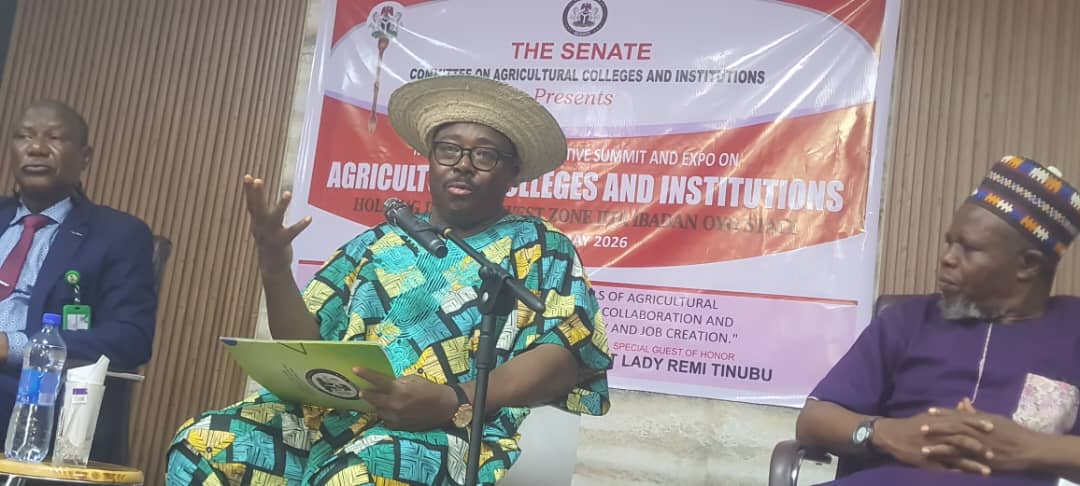
Speaking during a media briefing at the Nigeria Union of Journalists Press Centre, Iyaganku, Ibadan ahead of the first-ever National Legislative Summit on Agricultural Colleges and Research Institutions and Expo, the senator said the initiative was designed to tackle food insecurity, create jobs, and reposition Nigeria’s agricultural sector for global competitiveness.
Welcoming the senator and stakeholders to the event, leaders of the NUJ described him as a transformational leader whose contributions to national development and legislative reforms have continued to impact the country positively.
The union noted that over 64 media houses attended the briefing due to the senator’s reputation for supporting journalism and championing developmental initiatives.
Addressing journalists, Senator Alli explained that the summit, scheduled to commence in Ibadan, would bring together agricultural institutions, research agencies, international development partners, embassies, and policymakers to discuss practical solutions to Nigeria’s food crisis.
According to him, achieving food security requires the right legislative framework, stronger collaboration among institutions, and improved access to modern research findings by local farmers.
He lamented the disconnect between farmers and research institutes, saying many farmers were unaware of improved agricultural discoveries capable of boosting productivity and reducing losses.
The senator revealed that the summit would feature participation from several international partners, including representatives of foreign embassies, the European Union, GIZ, and agricultural desk officers from different countries.
He cited Malaysia’s successful adoption of Nigerian palm seedlings as an example of how Nigeria had failed to maximise its agricultural potential despite possessing enormous resources and expertise.
Senator Alli further stressed the need for stability in agricultural pricing to protect farmers from losses, noting that fluctuating cassava prices had severely affected local producers.
He also disclosed that his office had begun partnering with development organisations to empower youths and women through mechanised farming initiatives aimed at providing employment and increasing food production.
Part of the intervention, according to him, includes the introduction of solar-powered dryers to reduce post-harvest losses and improve food preservation for farmers.
The senator called on government at all levels, private organisations, and stakeholders to invest more in agricultural research institutions and colleges, many of which he said had deteriorated despite their historic contributions to national development.
Several heads of agricultural institutions at the event commended the initiative, describing it as a timely intervention capable of restoring the relevance of Nigeria’s agricultural colleges and research centres.
Representatives from the Cocoa Research Institute of Nigeria, Institute of Agricultural Research and Training, and the Federal Cooperative College said the summit would strengthen legislative support, enhance collaboration, and bridge the gap between research institutions and local farmers.
They maintained that Nigeria possesses competent researchers and the capacity to feed itself if adequate support, legislation, and funding are provided.
The stakeholders also urged private sector players and beneficiaries of agricultural research to support institutions through investments and partnerships capable of reviving the country’s agricultural sector.
The summit is expected to attract participants from across Nigeria and beyond, with discussions focused on food security, mechanised farming, research development, youth empowerment, and sustainable agricultural growth.